In just a few weeks, 15 Odyssey students will travel to California, where they’ll compete alongside teams from around the world.
While the Western Edge Invitational is focused on robotics, the challenge also requires teams to identify and research a real-world archaeological problem, then design a novel solution and share a prototype.
The Odyssey Dragons focused their "Innovation Project" on helping peers understand why archaeological sites and artifacts should be left undisturbed to avoid disrupting valuable evidence of the past.
The team’s central question was how to teach kids what to do when they find an artifact in a way they’ll actually remember.
“We needed a way to educate kids that could easily be used by everyone,” said Kyle, the team captain. “At first, we racked our brains with no luck. That’s when it came to us – video games! People love playing video games. But did they actually work to teach you?”
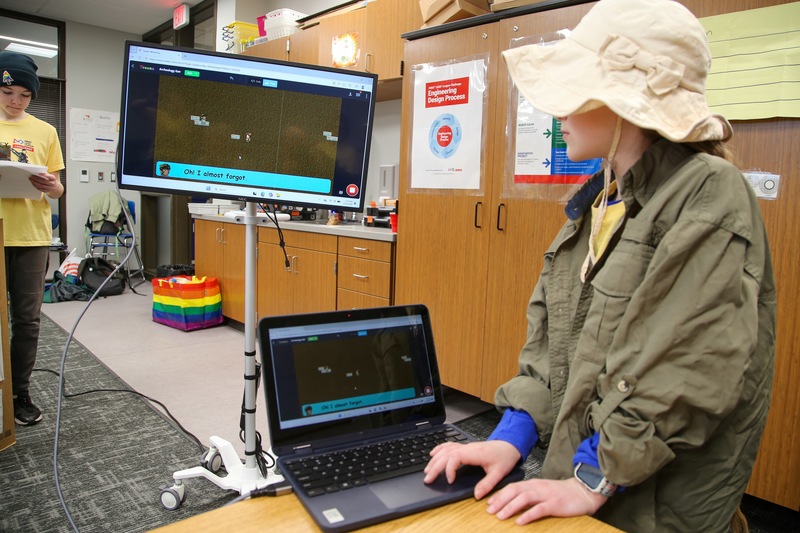
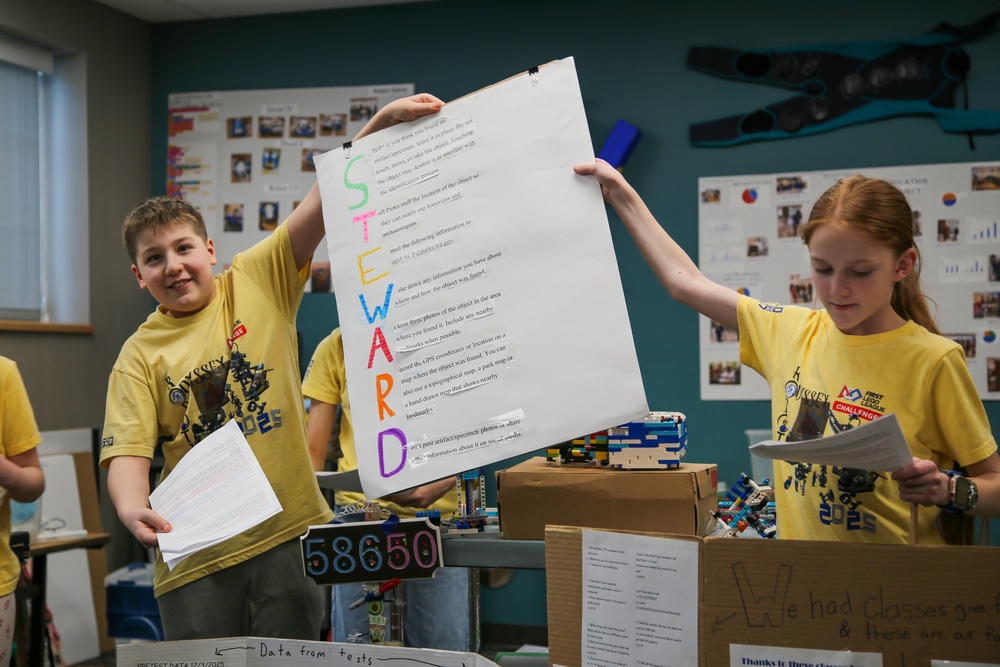
The students spent months researching educational games, interviewing and emailing archaeologists and other experts before building their own game using block coding in Tynker. The result walks players through finding an artifact, introduces the S.T.E.W.A.R.D. approach and wraps up with a quiz to reinforce learning.
After creating the game, they looked at whether it really worked as a teaching tool. Using pre- and post-tests with users, they revised both the game and the assessments based on feedback from teachers and experts.
Students adjusted issues like pacing and expanded the quiz at the end of the game so players would be better prepared. After another round of testing, the project had reached more than 500 students in 23 classes across eight schools in four states. The team reported a 241% increase on the question most directly tied to their goal: teaching students what to do if they find an artifact.
The team plans to continue testing the game with more classrooms, incorporating feedback to build an even stronger prototype for presentation in front of an international audience this May.