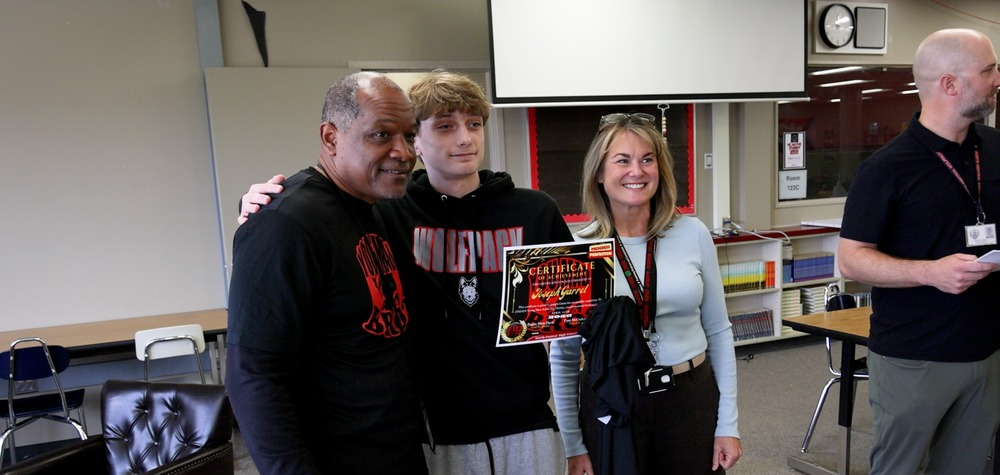
North Central High School held an early graduation ceremony this past week. It wasn’t for four years of academic achievement, it was for 10 months of progress. For the students in Spokane Public Schools' Fields of Diamonds and Young Men Achieving Destiny (YMAD) programs, it's a diploma that could be even more impactful.
A program built around the "Why"
The Department of Family and Community Engagement launched this mentorship initiative ten years ago at Rogers High School with a straightforward but often overlooked idea.
“Our system tends to react to what kids do, and what we're focusing on is why they're doing what they're doing,” explained SPS Student and Family Engagement Liaison Shon Davis. “And that leads us to root causes. That leads us to the family dynamic, generational trauma."
His two groups, Y.M.A.D. and Fields of Diamonds, serve what educators call "tier three" students. These are young people dealing with chronic absenteeism, behavioral challenges, long-term suspensions, and in some cases involvement with the juvenile justice system.
Davis underscores that these aren't kids who lack potential. "They had the smarts. They had the intelligence. They just didn't care. And we had to bring that out of them," He said.
The programs are about building trust with kids who tend not to trust adults, based on personal experiences. That trust needs to be rebuilt before anything can shift with academics or behavior issues. That means listening without judgment, showing up to games and practices, and doing what Davis calls a "warm transfer," which means intentionally walking students toward other trusted adults in the building so the support doesn't begin and end with one person.
Why a graduation matters
Over about ten months, from September through spring, students work through a social emotional learning curriculum at their own pace. The motto Davis lives by is "Progress over perfection." Some chapters take a week. Some take a month. That's by design.
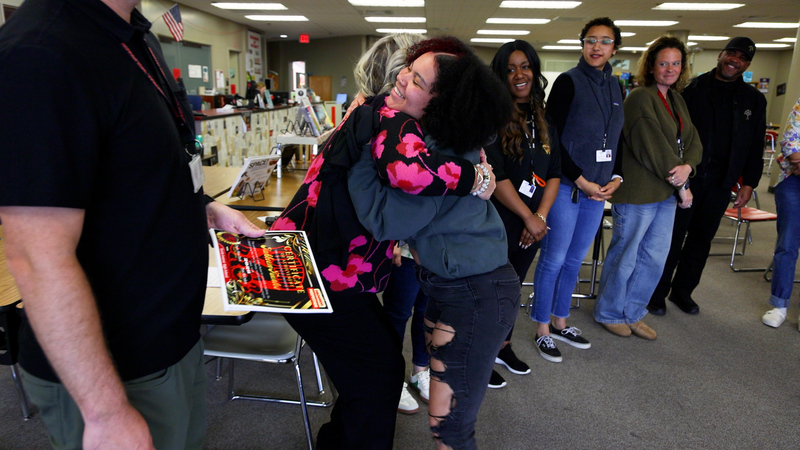
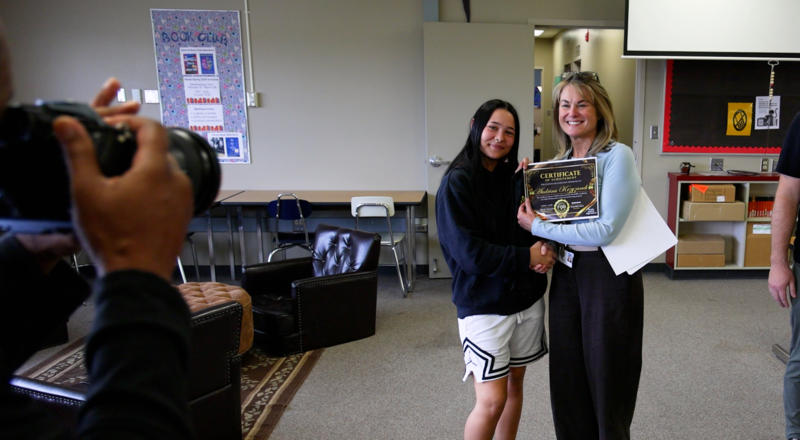
When students complete the curriculum, they graduate, celebrating with receipt of a certificate and a program T-shirt in a room full of people who came specifically for them.
That might sound simple, but for many of these students, it's a first.
"A lot of the kids that we work with, the attention that they get is always centered around what they've done wrong,” Davis said. “And so it's a lot of negative attention. These kids end up embracing that label of the bad boys, the bad girls."
The graduation is a direct response to that, with the goal of extending a student’s drive toward another commencement day.
"By celebrating what we call small wins or small successes, it gets them into the mindset of winning. Because if you're always losing, you begin to expect to lose,” he said. ”We want you to feel this graduation to motivate you for your high school graduation."
A village approach to a community problem
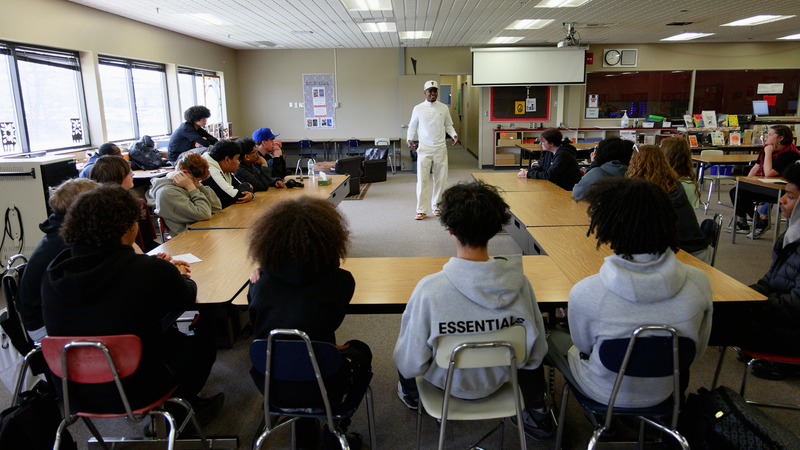
The NCHS graduation included a guest speaker who knows a little bit about building success out of this community. William Davis, Central Valley High School grad and former NFL cornerback, spoke to the kids about his upbringing.
“What I came to realize was that my environment was a big part of how I acted,” he shared, keeping to the theme of discussing the “why” and not the “what.”
Since starting at Rogers, the program has expanded to five high schools, five middle schools, and three elementary schools across Spokane with real results. Students have gone from 40-plus absences down to ten. Kids who started with six F's are now earning A's and B's.
But Shon Davis is direct about what's at stake when programs like this one can't reach everyone.
"Rejection seeks acceptance. And so, if the school rejects me, the gangs accept me," he said. "It's not just violence, it's a health issue. And we need to start urgently treating it that way."
From his perspective, the answer isn't more punishment, it's more presence. That can lead to more moments exactly like this one, where a kid's name gets called, the room applauds, and all of it is for something good.
"It just goes back to the whole village concept,” Davis said. “All of us are needed. All of us bring something different to the table in a diverse way to meet those needs in our schools, in our community."